the panama canal panama
How the canal was built

the panama canal country of panamaThe idea of digging a channel across this thin strip of land was first suggested in the 16th century by King Carlos of Spain, who ordered the first survey of possible routes. It would take almost 400 years to become a reality.

The French attempted the task in 1880 under the direction of the forceful Ferdinand de Lesseps, fresh from his success in building the Suez Canal. De Lesseps founded the Compagnie Universelle du Canal Interoceanique and set to work, but Panama proved to be more of a challenge than Suez. Various factors led to failure disease, the difficulty of digging a passage through Panamas tangled forest and red mud, the lack of a plan as to how to control the powerful river Chagres, a shortage of funds, and, perhaps most importantly, the decision to build a sea-level channel instead of a lock canal. In retrospect, the design was probably technically impossible. The Compagnie Universelle was declared bankrupt in 1889. Up to 20,000 workers are thought to have died of disease or accident.

The United States then began to take an interest. Panama was still part of Colombia, and the Americans attempted to negotiate the rights to build a Panama canal, but the Colombians backed out. Panama, supported by the US, declared independence on November 3, 1903, and shortly afterwards gave the Americans the rights to build the waterway.

The Americans were in a better position than the French. Firstly, the task was headed by the state rather than a private company, and the government was willing to put large resources into the effort, believing it was essential to United States naval power and trade interests. Secondly, it was becoming more widely accepted that malaria and yellow fever were spread by mosquitoes. Military doctor William C Gorgas launched a campaign to clean up the isthmus aimed at eliminating the insects, successfully keeping disease under control.

Thirdly, the Americans developed a clear plan of how the canal would work, deciding early on to build three sets of locks. Subsequently, they had inspired individuals in charge who showed great leadership and engineering skills, including John F Stevens and George W Goethals. The canal was completed in ten years at a cost of $352 million, four times the price of Suez, with 5,609 lives lost to disease and accidents. It was officially opened on August 15, 1914.

How the canal works

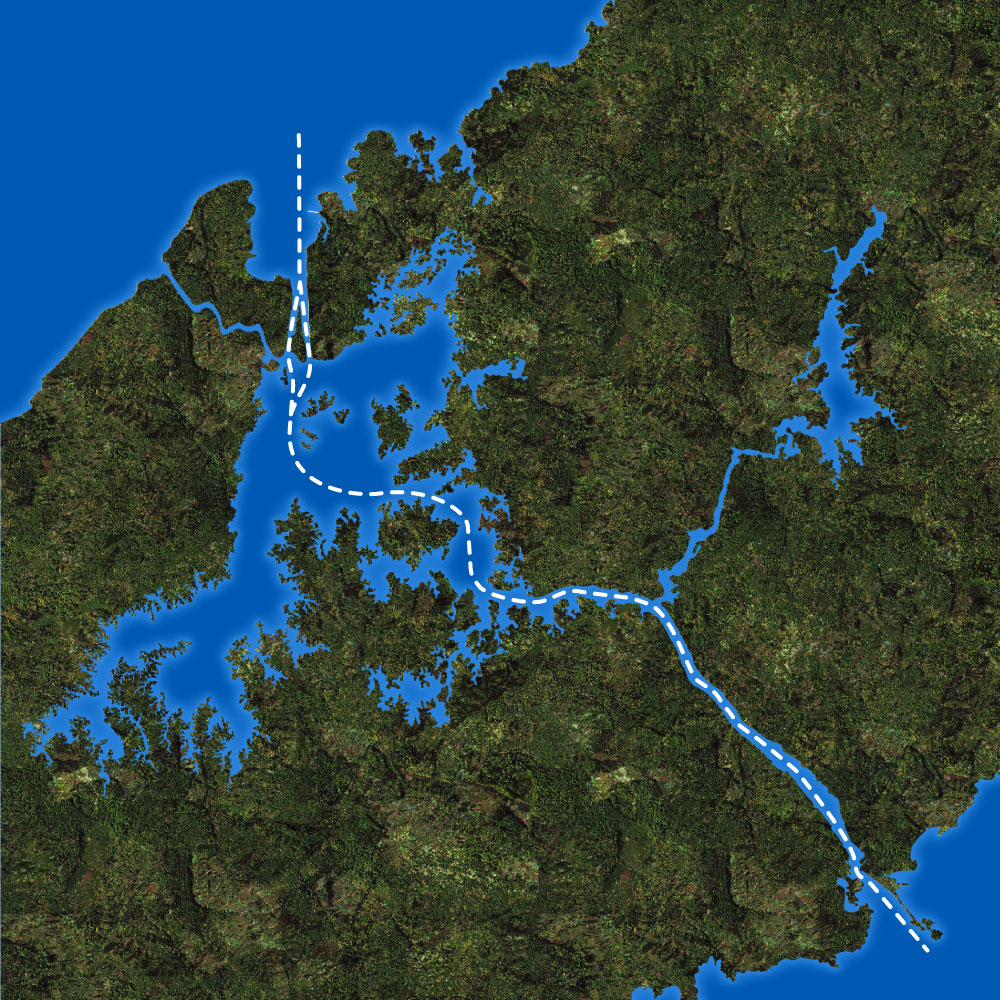
When a ship is ready to transit the canal, one or more Panama Canal Commission pilots and a contingent of line-handlers board the ship. From the Atlantic entrance, the ship heads for Gatun Locks, where it is lifted 85 feet in three stages, taking roughly an hour. Each of the three lock chambers is 110 feet wide and 1,000 feet long.

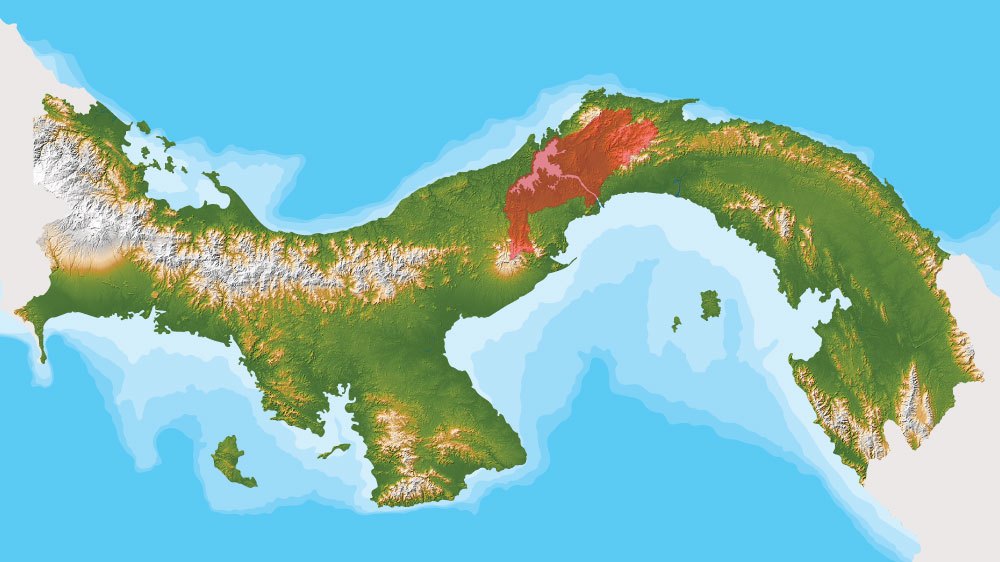
The chambers are filled with water from Gatun Lake, a vast reservoir created by damming the Chagres River. At 164 square miles, it was the largest man-made lake in the world when it was created. There are no pumps the water rushes into the chambers due to the force of gravity, and is then re-used at each step before being flushed out to sea. It takes 56 million gallons of water to fill all the chambers for a complete transit.

the panama canal country of panamaOnce through this first set of locks, the ship navigates 23 miles across the peaceful waters of Gatun Lake, past forest-covered islands that were once hilltops. Then it enters the Gaillard Cut. This eight-and-a-half mile section, cutting through the hills of the continental divide, was the most frustrating to dig, with frequent mud slides that could wipe out months of work in a few seconds. It is now the narrowest and most dramatic part of the canal, with steep sides and seven curves to navigate. The Cut is being widened as part of a $1 billion modernization program, and should soon allow two-way traffic of even the biggest ships that use the canal.

At the other end of the cut, there are two more sets of locks to lower the ship back down to sea level Pedro Miguel, with just one chamber, and Miraflores, with two. Then the vessel heads out to the Pacific under the Bridge of the Americas.

There is an average of 36 transits a day, each of which takes between ten and 12 hours. Ships pay tolls based on tonnage, with the average fee at $43,000. More than 150 Panama Canal Commission employees play a direct part in each transit.

Why and how the canal was transferred to Panama

When Panama originally agreed that the United States could build and run the canal, the treaty also gave the US the right to act "as if sovereign" over the ten-mile wide strip of land where the waterway would be built.

This zone became an American enclave in the middle of Panama, with its own governor, police force, courts, shops, post offices, churches and schools. Those who lived there mainly Panama Canal employees and their families were known as Zonians. The US flag was flown and Panamanians could not enter freely. US military bases were built, with tens of thousands of troops stationed here; as many as 68,000 during the Second World War.

Negotiations to find another arrangement were attempted without definitive success in the 1920's and 1930's. There was a series of anti-US demonstrations in the 1950's and 1960's and domestic pressure in the US began to grow. Talks between US president Jimmy Carter and Panama's leader General Omar Torrijos led to the Panama Canal Treaties of 1977.

The treaties went into effect on October 1, 1979, ending US control of the canal zone and creating the Panama Canal Commission, an agency of the US government. The canal and the military bases, it was agreed, would be handed over to Panama over a period of more than 20 years, culminating with the transfer of the waterway at noon on December 31, 1999.

Over the past 20 years, the number of Panamanian employees at the canal was increased to make the transfer as smooth as possible. Today, 97 percent of the 9,000 staff are Panamanian citizens.

In 1993, Panama's national assembly passed a constitutional amendment creating the Panama Canal Authority, the body that will oversee canal policy. The authority will have an 11-member board of directors appointed for staggered nine-year terms, ten named by the president of Panama and ratified by the legislative assembly, and one appointed by the assembly alone. The law also made the canals administration independent of the government system.

An organic law setting out the principles by which the canal will be run was passed in 1997 and has since been supplemented by detailed regulations.

The canal as a business

More than 830,000 ships have transited the canal since it opened in 1914. In fiscal year 1999 (ending September 30), there were more than 13,100 transits by ocean-going ships, carrying 228 million tons of cargo and paying a total of $569 million in tolls.

In the past, the canal has been run as a break-even operation, putting all its profits back into maintenance and improvements. More than $255 million a year is spent on regular maintenance programs, and a $1 billion modernization program has also been funded from tolls. Now, as it becomes an independent Panamanian body, the canal will strive to make a profit without jeopardizing its long term future.

"The principal challenge is to make the canal an integral part of the economic and social development of the country. It must be a profitable entity, we are not in a position to subsidize it, so we have to optimize its resources, but at the same time we must maintain its long term competitively," said the canals director of corporate planning and marketing Rodolfo Sabonge.

Panama in the past has received around $110 million annually from canal operations, made up of a fixed sum agreed by treaty and a set percentage of tolls revenue. That figure will rise to $190 million in the first year under Panamanian control, after an increase was agreed in the proportion of tolls going to the state. In addition, Panama will receive any clear profits once all other costs have been met.

The Authority will aim to increase revenue from sources other than tolls hydro-electricity, for example. It also hopes to make commercial use of its expertise and equipment in areas such as dredging and ship repair.

The United States remains the most important user of the canal in terms of the amount of cargo moved, with around two-thirds of all shipments going to or from the US. Corn, soybeans, wheat, chemicals, petrochemicals, containerized cargo and bananas are the main commodities shipped through the canal.

The canal also generates other activities. The waterway makes Panama the crossroads of the world, providing the traffic that uses the recently privatized ports, now among Latin Americas busiest, handling more than 1 million containers a year. It will also provide the custom for the Panama Canal Railroad, being built across the isthmus to offer shippers another way of getting containers from one ocean to the other, and for the many businesses being set up in the former canal zone offering repairs, fuel supplies and cargo services.

The 300 or so cruise ships that go through the canal annually will also be a source of revenue, it is hoped. Until recently, there have been no arrangements for passengers to get off the boat and explore Panama. Now, cruise terminals are being built at either end of the waterway which, it is hoped, will provide a major boost for tourism.

The former canal zone is also attracting investment, with $1.5 billion promised in maritime, commercial, industrial and educational projects, according to the Inter-Oceanic Region Authority (ARI), the government body set up to market the zone.

"We want the whole of the economy to grow for the benefit of the people. The economic strategy is not only to make the most of the canal and to incorporate the reverted areas, but to incorporate new activities to those we already have," said ARI head Nicolas Ardito Barletta in a recent speech.

The future of the Panama Canal

Canal traffic is expected to double in the next 50 years, and cargo tonnage is predicted to quadruple in that time. Even with the current expansion program, which will increase the number of transits a day by 20 percent from 2002, the canal is likely to reach capacity by around 2012.

That means the Authority needs to make some important decisions. Feasibility studies are underway into building an additional lane of locks, possibly larger than the existing ones, and creating three reservoirs to provide more water.

The future will be in the hands of the Panamanian people.

"The canal now has 2.7 million plus owners. Every Panamanian is a shareholder of the Panama Canal and it has to answer to its shareholders. If we decide we want a third set of locks, we will have to ask the shareholders through a referendum. We have to start talking in terms that were not used to hearing at the canal and start thinking of our 2.7 million owners who want to see a profit," said administrator Mr Aleman

Written by Emma Griffiths

Panama Marine Adventures - dedicated to provided the best Panama Canal transit and cruise experience, our company operates the newly refurbished Pacific Queen, a vessel ideally suited for Panama Canal transits and cruises. With a capacity for 300 passengers, she measures 119 ft. in length and 25 ft. in width. Passengers will enjoy its two spacious, enclosed floors, fully equipped with air conditioning and a comfortable seating arrangement. In addition, an open-air third floor serves as an ideal vantage point from which to enjoy your cruise and relax in a tropical setting.

Panama Canal Transits - For those of you who have personal pleasure craft, or non-commercial, we have provided you with all the information and prices associated with making a transit through the Panama Canal.